Introduction
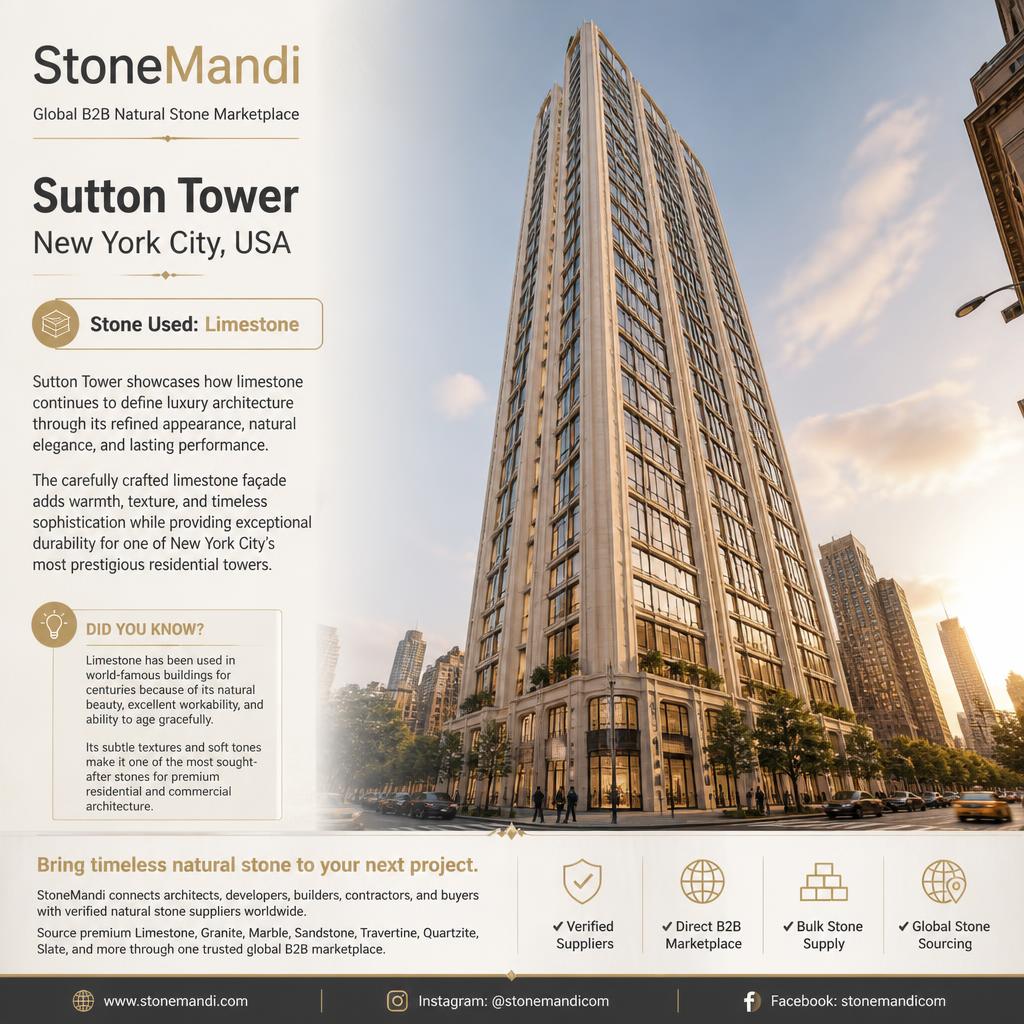
Rising 850 feet above Manhattan’s East Side, Sutton Tower stands as one of the most striking additions to the New York City skyline in recent years. Located at 430 East 58th Street in the historic Sutton Place neighborhood, this residential skyscraper is distinguished by a rare feature in modern high-rise construction: a continuous limestone façade running from base to crown. At StoneMandi.com, we spotlight projects like Sutton Tower to show how natural stone continues to shape the world’s most prestigious architecture.
Project Facts
- Project name: Sutton Tower
- Location: 430 East 58th Street, Sutton Place, Manhattan, New York City, USA
- Height: 850 feet (259 meters)
- Building type: Residential condominium tower
- Architectural design: Thomas Juul-Hansen
- Architect of Record: Stephen B. Jacobs Group Architects
- Developers: Gamma Real Estate and JVP Development
- Primary façade material: Bavarian limestone
- Distinction: One of the tallest residential buildings on Manhattan’s East Side waterfront, and Thomas Juul-Hansen’s first skyscraper project
Credit Where It’s Due: The Architectural Vision Behind Sutton Tower
Sutton Tower was designed by Thomas Juul-Hansen, the Danish-born architectural designer known for blending classic New York elegance with contemporary design sensibility. Juul-Hansen conceived the tower as a bridge between old and new New York, pairing a solid limestone base that echoes the low-rise, prewar character of the surrounding Sutton Place neighborhood with a more transparent, glass-forward upper section that opens up as the building rises.
The design culminates in a champagne-colored stainless steel crown with geometric, Art Deco-inspired facets — a detail inspired by the ornamental crowns of historic New York landmarks, which also conceals the building’s mechanical infrastructure. Stephen B. Jacobs Group Architects served as Architect of Record, working alongside Juul-Hansen to bring the design to completion.
The result is a tower that has been widely recognized for its craftsmanship and for reintroducing full masonry cladding — a technique rarely used at this scale in contemporary construction — to Manhattan’s skyline.
The Stone Used: Bavarian Limestone
The defining material of Sutton Tower is Bavarian limestone, a natural stone sourced from Germany and prized for its light, warm tones and fine, consistent texture. Unlike most modern residential towers, which typically rely on glass and metal curtain walls, Sutton Tower’s limestone cladding extends the full height of the building, from its street-level base to its crowning feature, giving the tower a monolithic, timeless presence on the skyline.
Why Limestone Is a Preferred Choice for Construction Projects
Limestone has been used in landmark buildings for centuries, and it remains a leading choice for architects and developers today for several reasons:
- Natural elegance – Limestone’s soft, neutral color palette and subtle texture lend a refined, classic aesthetic that suits both historic and contemporary architecture.
- Durability – Properly quarried and installed limestone can withstand decades of weathering, making it a reliable material for building exteriors exposed to varying climates.
- Workability – Limestone is relatively easy to cut, carve, and shape compared to harder stones, allowing architects greater design flexibility for detailed façade work, moldings, and ornamentation.
- Graceful aging – Limestone develops a natural patina over time rather than degrading, which is part of why so many century-old limestone buildings still stand as architectural icons today.
- Versatility – Beyond exteriors, limestone is widely used in flooring, cladding, and interior detailing across both residential and commercial projects.
These qualities are exactly why Sutton Tower’s design team chose limestone as the material to carry the building’s architectural narrative — one that respects the craftsmanship of prewar New York while meeting the performance demands of a modern high-rise.
Sourcing Natural Stone for Your Next Project
Projects like Sutton Tower demonstrate why natural stone remains a defining material in premium architecture. Whether you’re an architect, developer, or contractor planning a project that calls for the same enduring quality, StoneMandi.com connects buyers with verified natural stone suppliers worldwide.
Through StoneMandi.com, a global B2B natural stone marketplace, you can source limestone, granite, marble, sandstone, travertine, quartzite, slate, and more — directly from verified suppliers, with access to bulk supply and global sourcing options.
Explore verified limestone suppliers and other natural stone options at StoneMandi.com to bring the same timeless quality to your next construction project.
Sources: Dezeen, e-architect, ArchEyes, Architizer, Robb Report, Field Condition